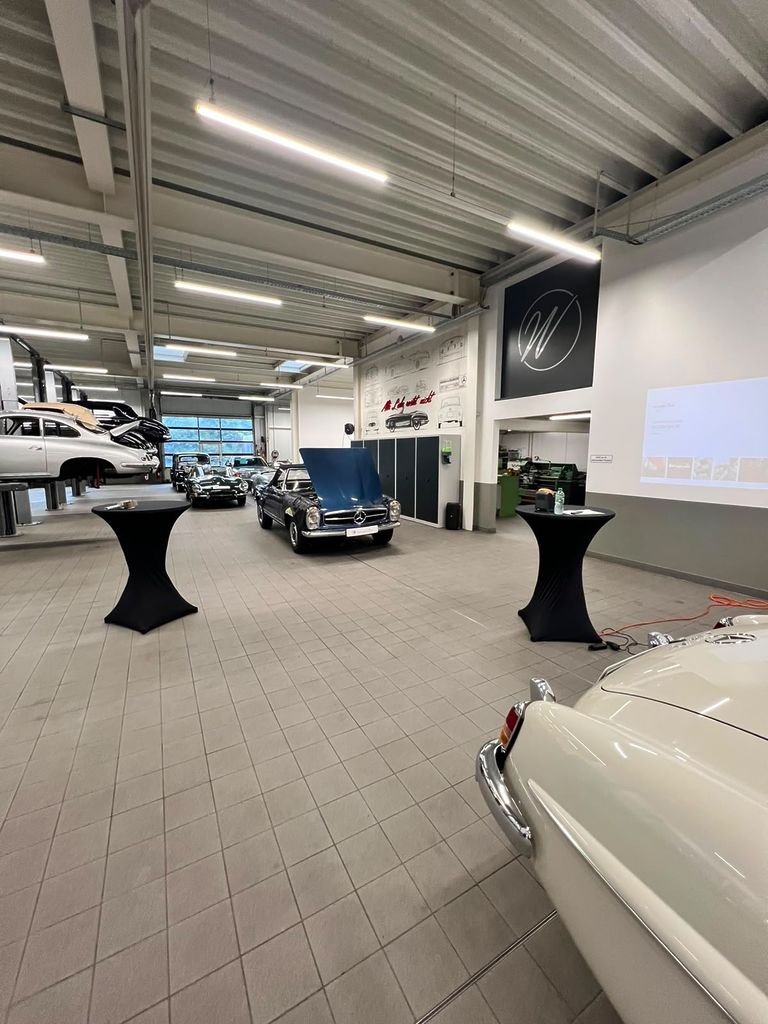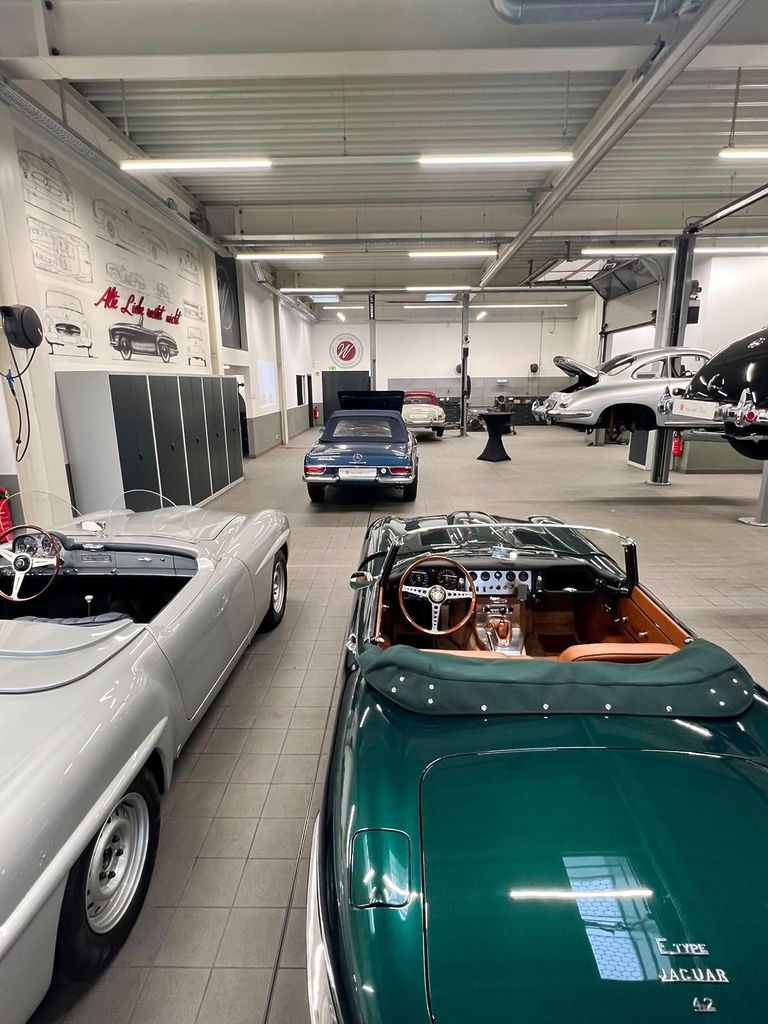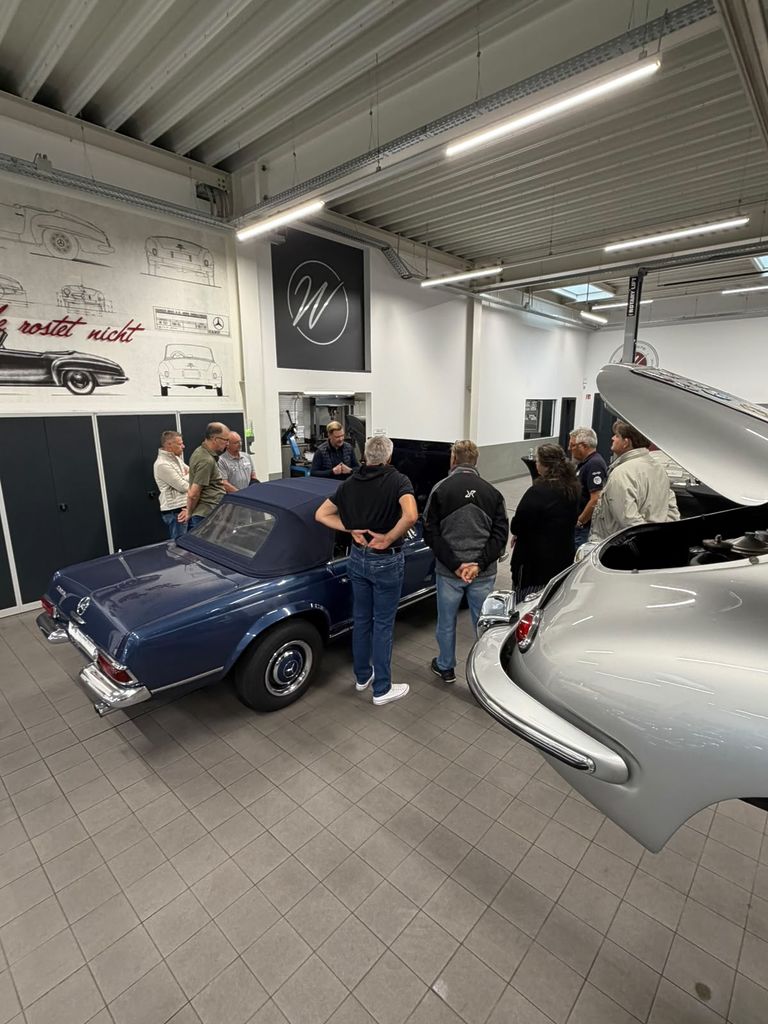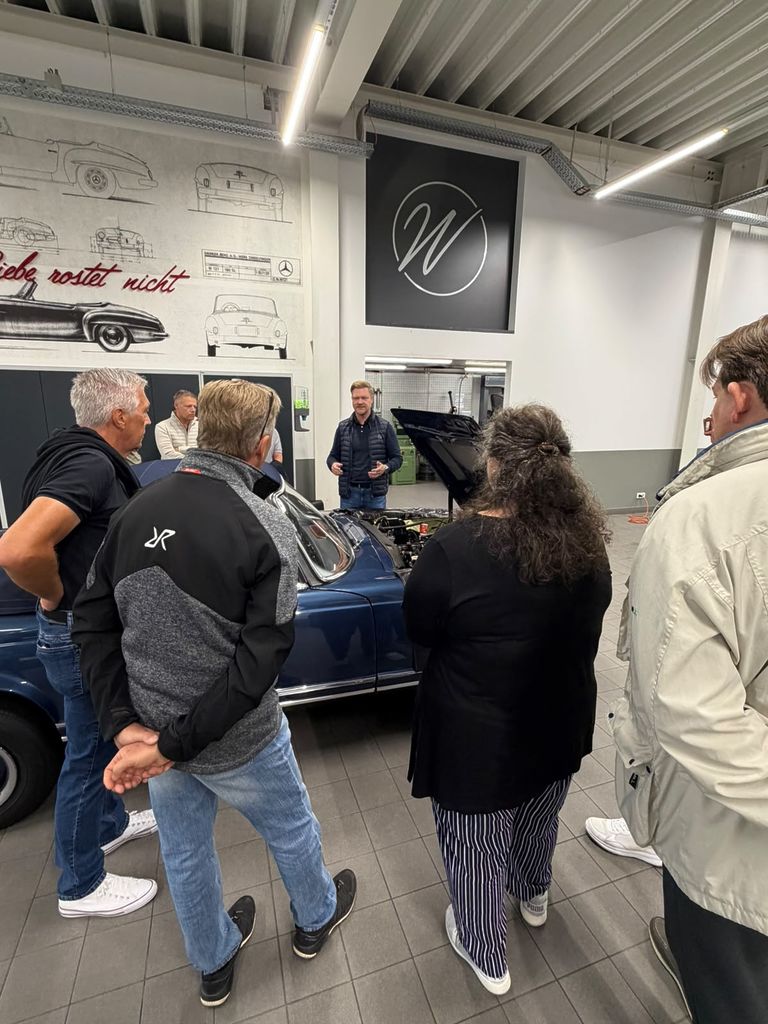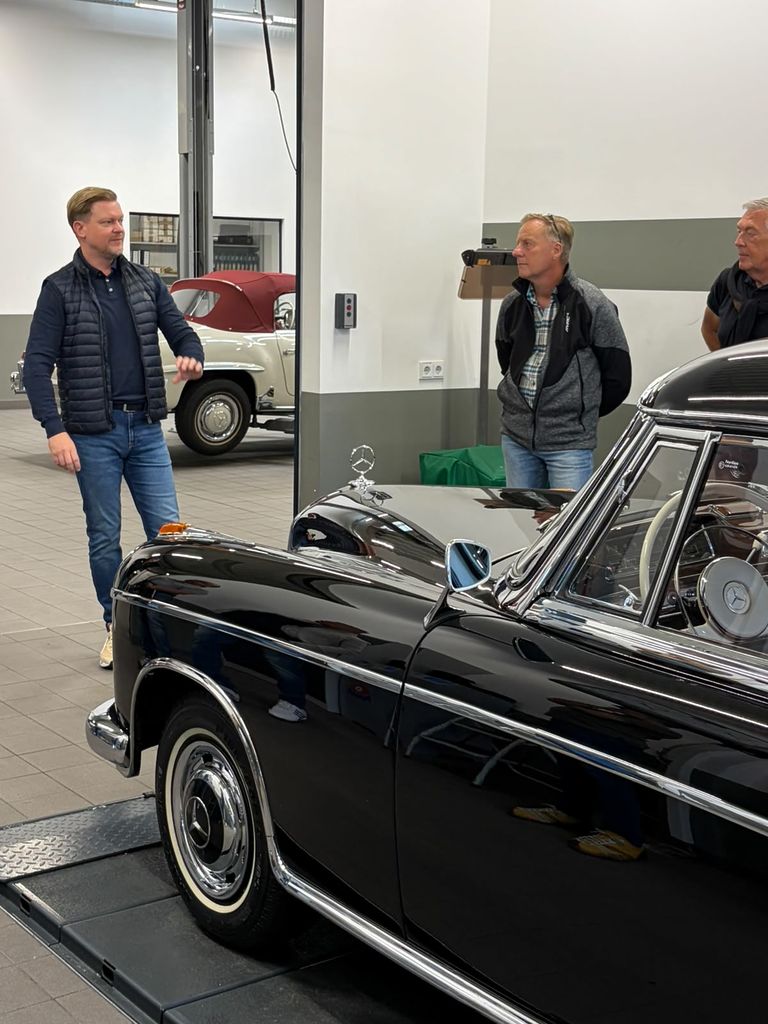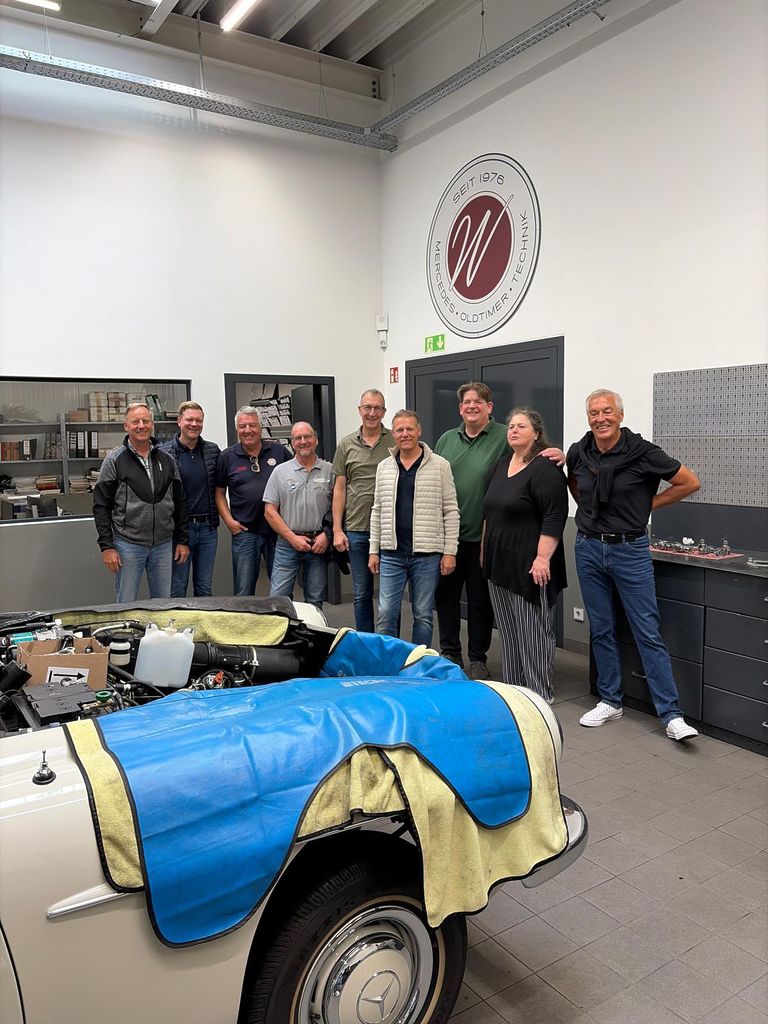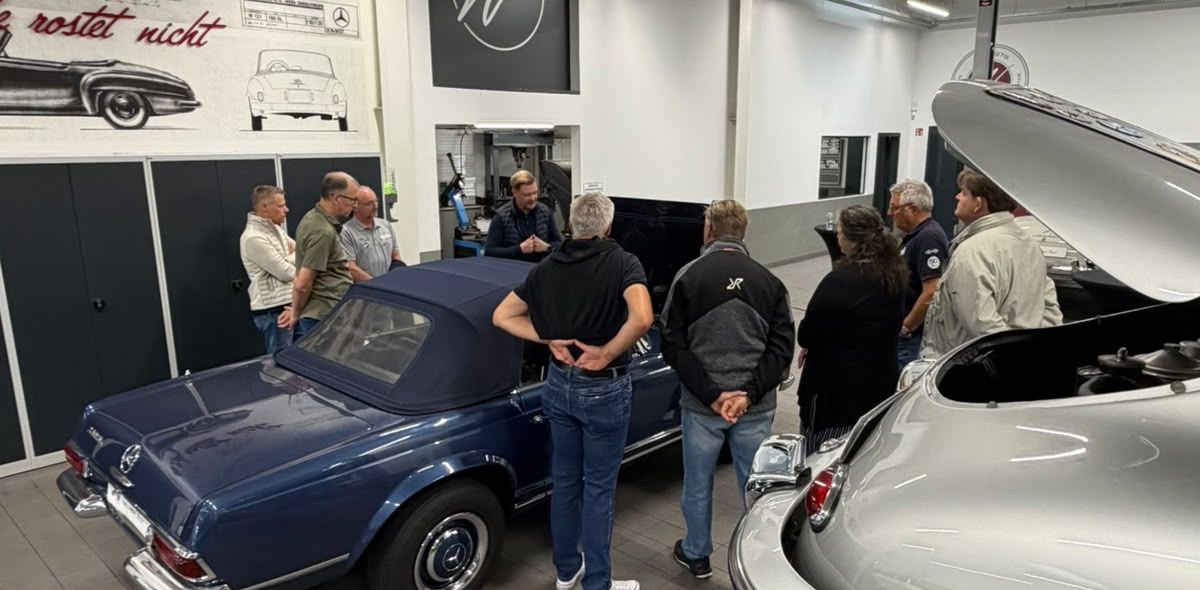
On September 5, 2026, WALLNER Classic once again focused on the technology behind Mercedes-Benz classic cars. At our annual Classic Car Technology Workshop interested classic car enthusiasts had the opportunity to spend a morning delving deep into the world of engines, drivetrains, and automotive technology.
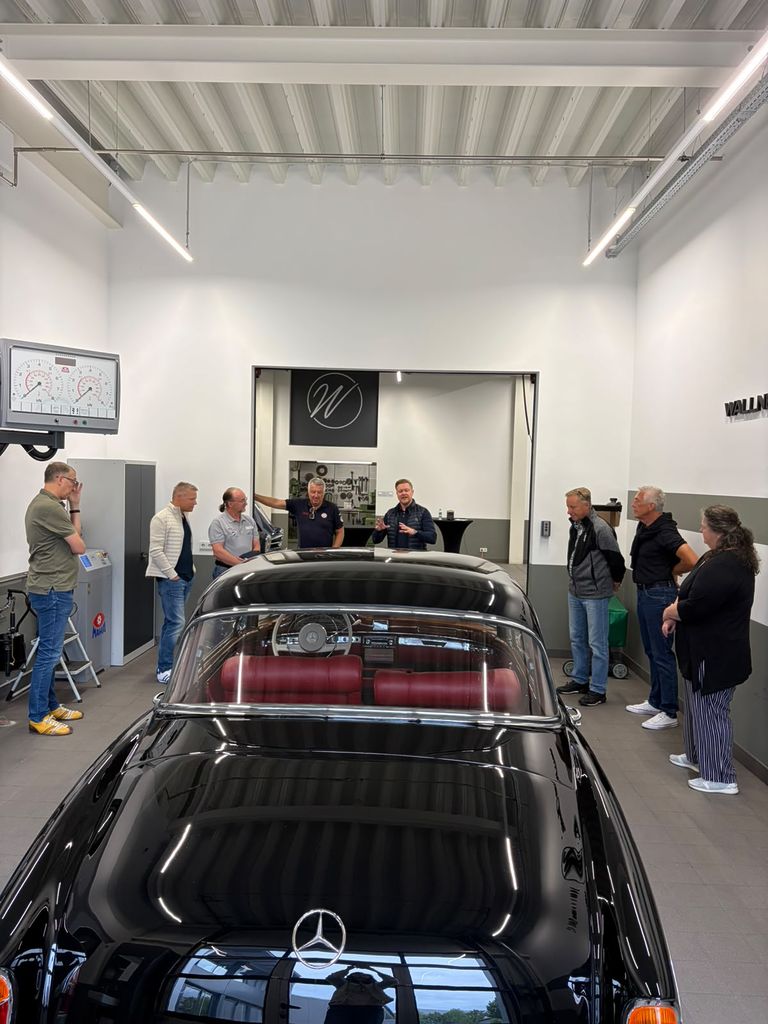
After a brief get-together in our showroom, we headed straight to the workshop. There, a variety of classic Mercedes-Benz cars and a wealth of technical knowledge awaited our participants.
A special highlight of this year’s program was the presentation of our new air conditioning system made by WALLNER Classic. Retrofitting modern air conditioning is an exciting challenge, especially for historic vehicles: It’s designed to enhance the comfort of a classic car without losing sight of the vehicle’s character.
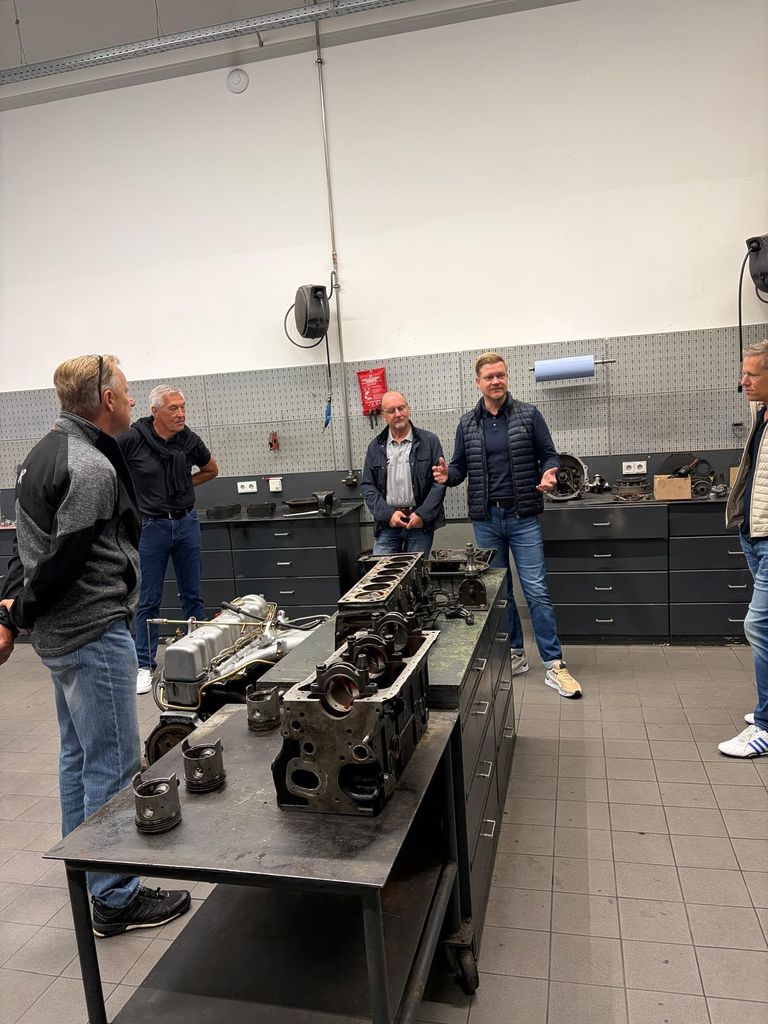
Next, we turned our attention to the heart of every car: the engine. We explained the operation of various engine designs and traced the path of power from the engine through the clutch to the entire powertrain..
The discussion got very specific: How does a crankshaft work? What is the camshaft’s function? How do the valves open and close? And how do all these components work together so that the combustion in the engine ultimately generates motion?
Engine lubrication was also discussed in detail. After all, oil is much more than just a fluid that needs to be changed regularly. Participants learned about the roles that lubricants play in a vehicle and why proper maintenance is crucial to an engine’s service life.
Concrete examples from our day-to-day workshop operations demonstrated just how important this is in practice. Using various cases of engine damage in four- and six-cylinder engines, we clearly explained how damage can occur and the technical factors behind it.
Another focus was on the braking system. The construction and operation of drum and disc brakes were compared.
The discussion focused not only on the differences between the two systems, but also on the technical considerations that must be taken into account with historic vehicles.
Of course, a look at the fuel systems of classic Mercedes-Benz vehicles was also a must. The participants explored carburetors and fuel injection pumps and gained insight into the various technical solutions used to fuel the engines of past decades.
It is precisely these components that make the technology of historic vehicles so fascinating: Many of these solutions continue to function reliably even after decades - provided they are properly understood, maintained, and repaired.
To wrap things up, we addressed a question that is of particular interest to many classic car owners: What does an engine overhaul at WALLNER Classic actually involve?
From the initial diagnosis through the disassembly and inspection of individual components to the reconditioning and subsequent reassembly, the presentation explained the steps required to transform an engine in need of overhaul back into a reliable unit.
It became clear that experience, technical understanding, and a close examination of every single component are crucial.
Our technical workshop thrives not only on the topics themselves, but above all on the exchange of ideas. Asking questions, handling components, understanding technical concepts right on the vehicle, and sharing experiences with one another -that’s exactly what makes this morning so special for us.
We would like to thank all participants for their keen interest, their many questions, and the engaging discussion.
And, of course, we're already looking forward to the next workshop at WALLNER Classic.
After all, if you really want to understand a classic, sometimes you just have to take a look under the hood.