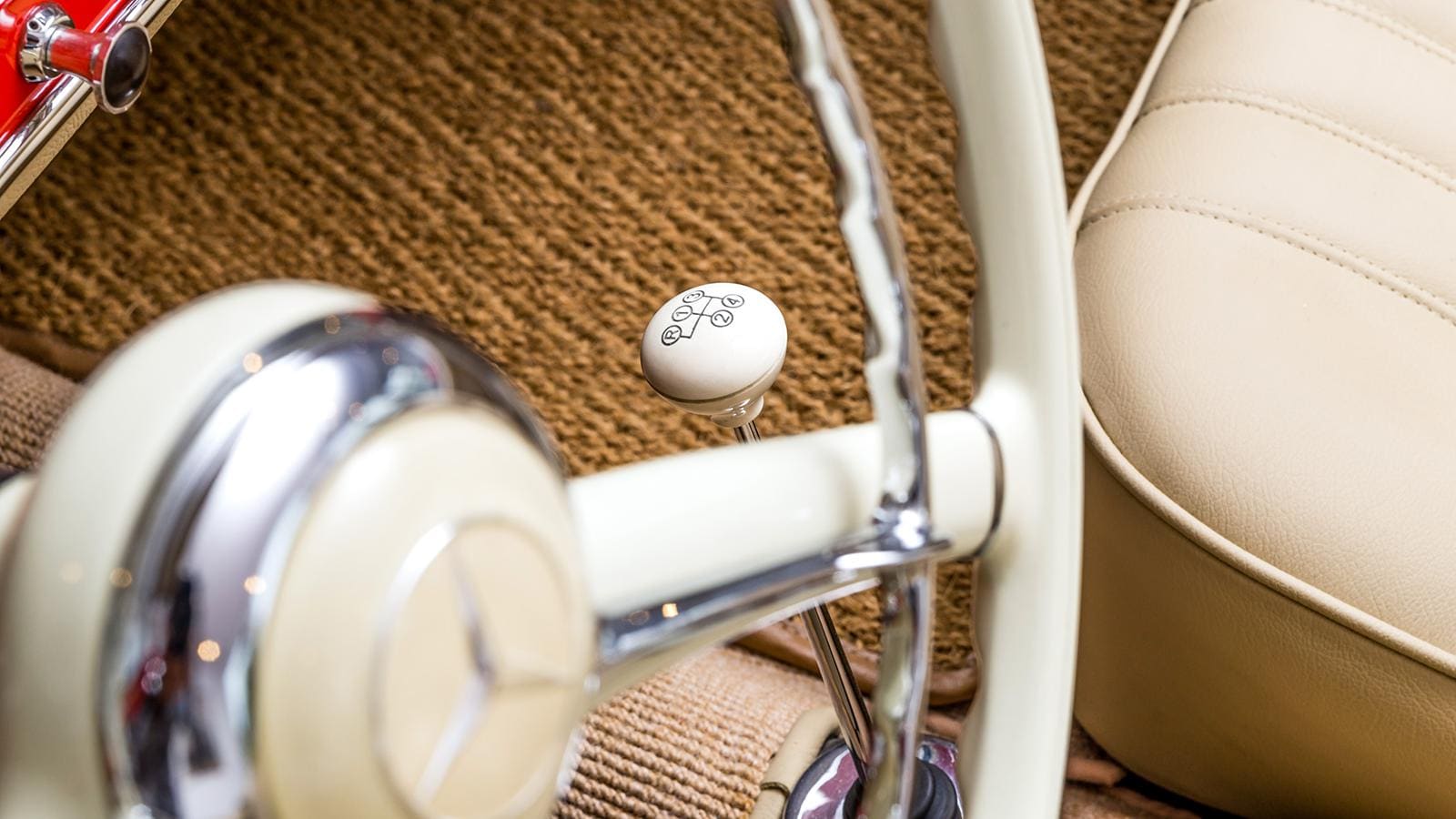
The 190SL is one of the eternal top ten most popular German classics. This car has seen a decent price increase over the last 20 years. It seems to become more and more difficult to find a solid car. Often and gladly discussed: Is a bargain still a bargain in the end? Better known as: How to get the most car for little money? Is that even possible (yet)?
There is no clear answer for this, the vehicles are in too many different conditions. But you can get closer if you ask yourself the right questions.
Actually, the question should be: How to become a happy 190 SL-owner?
Two ingredients seem essential for the happiness: a suitable vehicle and a workshop that knows something about its craft.
The editor-in-chief of Motor Klassik, Hans-Jörg Götzl, once wrote in the foreword that readers should look for a workshop near them that specializes in the car they want to buy. Because without a workshop, you won't have much fun with your dream car in the long run. Some people are good mechanics, but safety-relevant repairs in particular should be carried out by a master mechanic for your own safety.
This raises two more questions:
How can I recognize the right vehicle for me?
How can I recognize a good workshop?
This is very individual, which we also experience every day in our workshop. You have to ask yourself what kind of usage behavior you want to display. Are you an absolute originality junkie who prefers to look at the car rather than drive it? Or is the driving pleasure in the foreground and one plans now already in the spirit which tours one would like to make with the beautiful Cabriolet. This is where the areas of appearance, originality and technology come into play.
The purchase of a classic car as a restoration object should be well considered, as the high price of spare parts can quickly exceed the actual price budget. Beforehand, a detailed cost breakdown should be made as accurately as possible.
In the case of a Mercedes 190 SL, the following should be noted first:
In the following, we would like to elaborate on a few points:
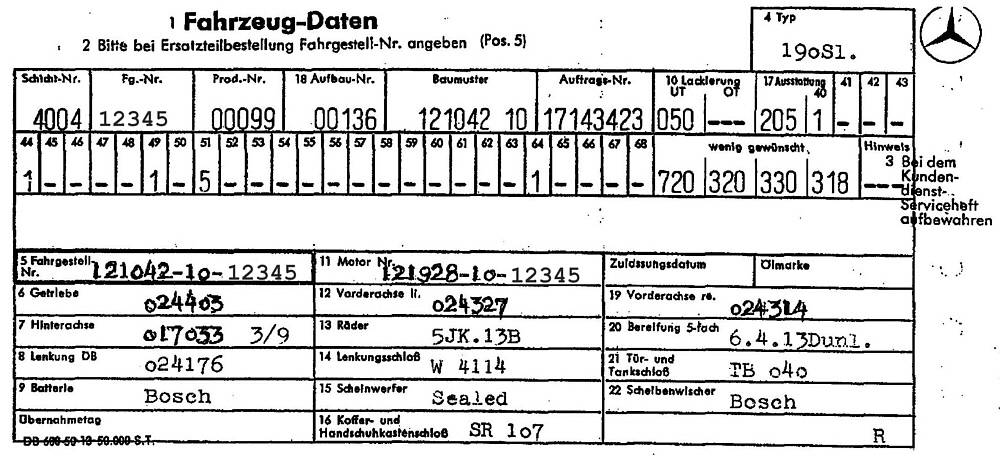
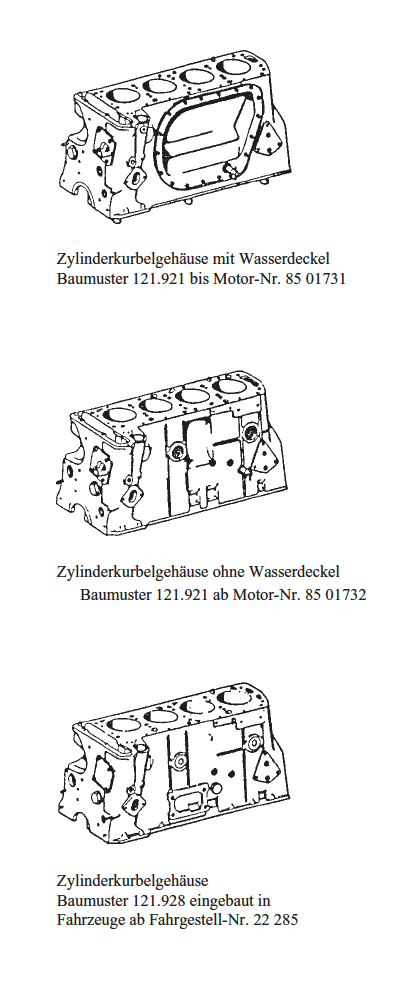 Here should be the right type of engine in the car. Anything else will be costly. The 190SL was available in 3 variants: 121 921 water cover, 121 921 closed cylinder crankcase or 121 928. The compression value 8.8 corresponds to the first series of the cylinder crankcase 121 921 with water cover, while 8.7 indicates the later series 121 928 without water cover. These values can be read on the outside of the water outlet of the cylinder head as a cast number or on the left of the crankcase. Please note: Due to the age of the engine, it may or may not be the same as when it was first delivered. Here it is worthwhile to look closely, because one or the other 190 was already sold with a pontoon engine. In August 1961 the engine series M 121 928 replaced the series M 121 921. For the left-hand drive vehicles, the new engines were installed from chassis end number: 22122, for the right-hand drive vehicles from 22285.
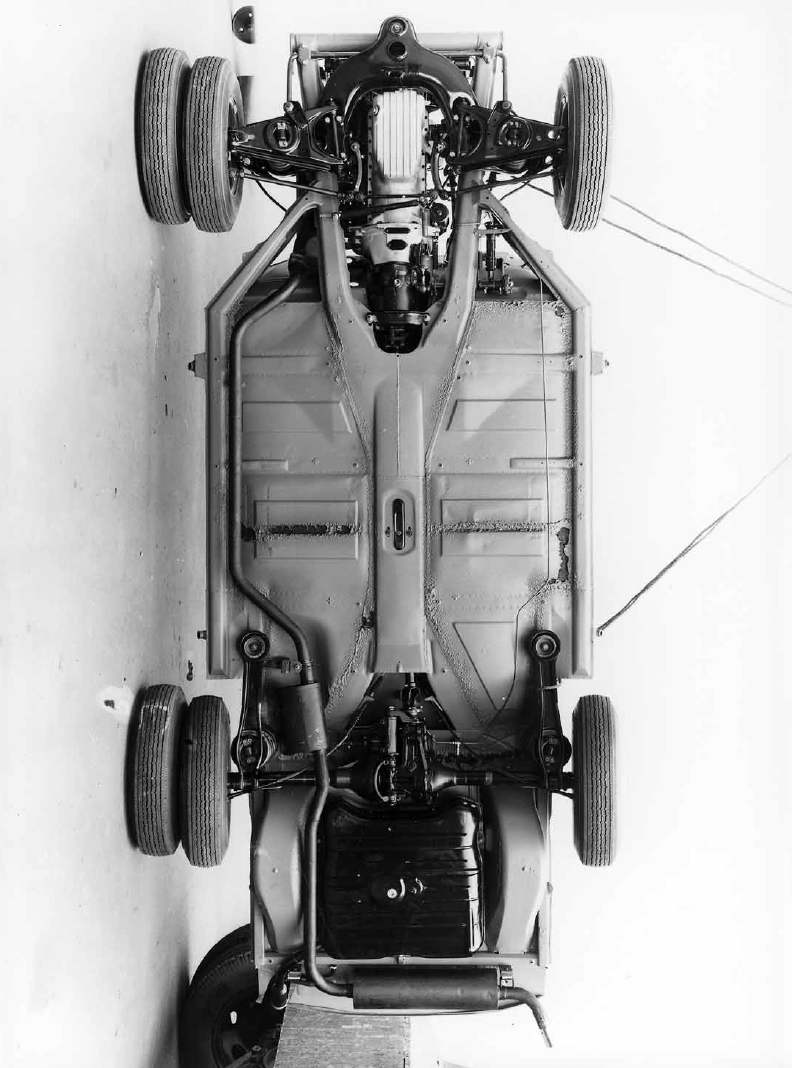 The center section often has unpleasant surprises in store in the form of filled-in front and rear fender entry plate extensions. There should actually be a gap here in both directions, which is filled by an unpainted plastic piping. The entire frame floor offers plenty of surface for rust to attack. The mounts of the thrust rods and shock absorbers on the rear axle are among the vulnerable areas, as is the entire front axle. The usual suspects: Jack mounts, lamp pots, air intakes and all sheet metal connections. The condition of the wood paneling visible in the footwell under the carpets also gives some indication. Doors, hood and trunk lid are made of aluminum and thus rust-resistant. Even or especially if the underbody looks good visually (and doesn't match the rest of the car, since it's exactly the underbody that looks so fresh), there's often patchwork underneath. It should be worked on the mirror side, if this is not the case, improper sheets were welded in. Regarding rust, you should also look in the engine compartment under the battery in the battery box and in the recess of the brake booster. The water drainage from the engine hood is introduced between the bulkhead plate on the door pillar and the installation plate in front of it. This is where rust tends to nestle. Take a longer look at the body, you will not regret it.
Even if the 190 SL was built without major changes at first glance, there are certain details that indicate a particular year of manufacture. For example, in the early years there were the sun visors made of celluloid, then they were leathered. The license plate lights have changed from left and right next to the license plate, integrated in the horns. The very early SL still came out of production without gill moldings. Also the seating changed from bucket seats of the early SL then to the normal seats with folding backrest. Here only some changes enumerated, the allegedly last body change at the 190SL: from 31.08.1960 the trunk lid handle was changed. One should deal with this a little before buying, so that one buys if possible a vehicle, which is consistent in itself. Take an expert or appraiser with you. This pays off. We look at vehicles with many customers or they come to us with potential vehicles before they buy to have them appraised by us.
And here we come to the second question:
How can I recognize a good workshop for my 190SL?
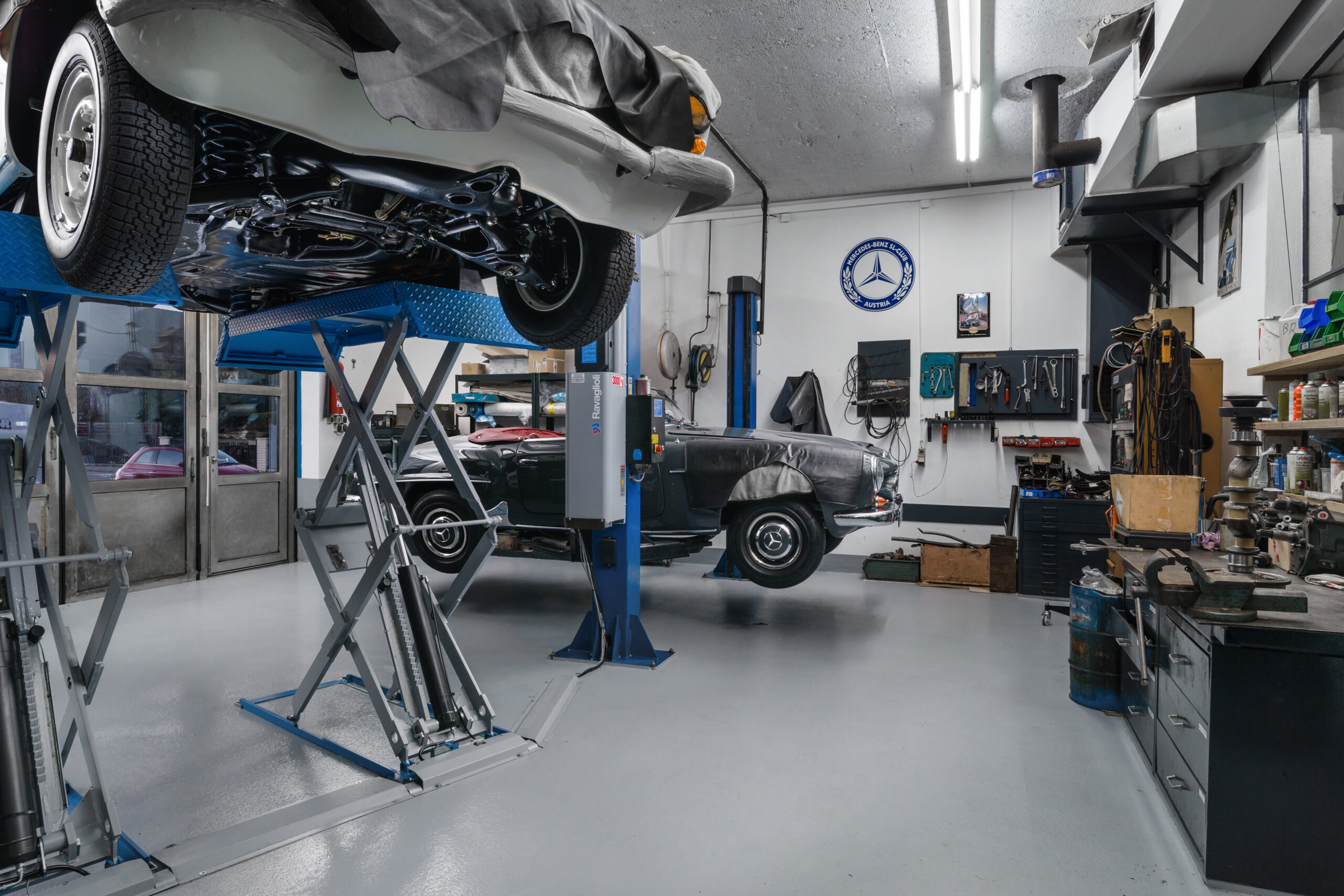
You can consider yourself more than lucky if you have found a workshop around the corner that is familiar with W121 technology. Many owners have to travel several kilometers to get the necessary support for their sweetheart. It would be desirable to have a workshop that often and regularly has these cars in care. Who does something regularly and often, knows the peculiarities of the technology and all the weak points of the 190 SL. Ideally, you will also see some 190SLs on site at the first appointment or have reference projects shown to you. The feeling and the sympathy should be right, as the workshop is to be seen as a partner and companion. Simple things such as filling in the correct engine oil when changing the oil, 20W50 on a mineral oil basis, should be clear. A good workshop takes care of the vehicle and looks at it more closely at the first appointment in order to discuss the current condition with you and, if necessary, to make recommendations as to what is sensible for its maintenance. The vehicle is driven to the brake test stand and the brake values are checked. The vehicle is lifted on the lift and the underside is examined more closely. Such things should be considered as standard, because they help both parties to get a feeling for the SL.
The weak points at a glance:
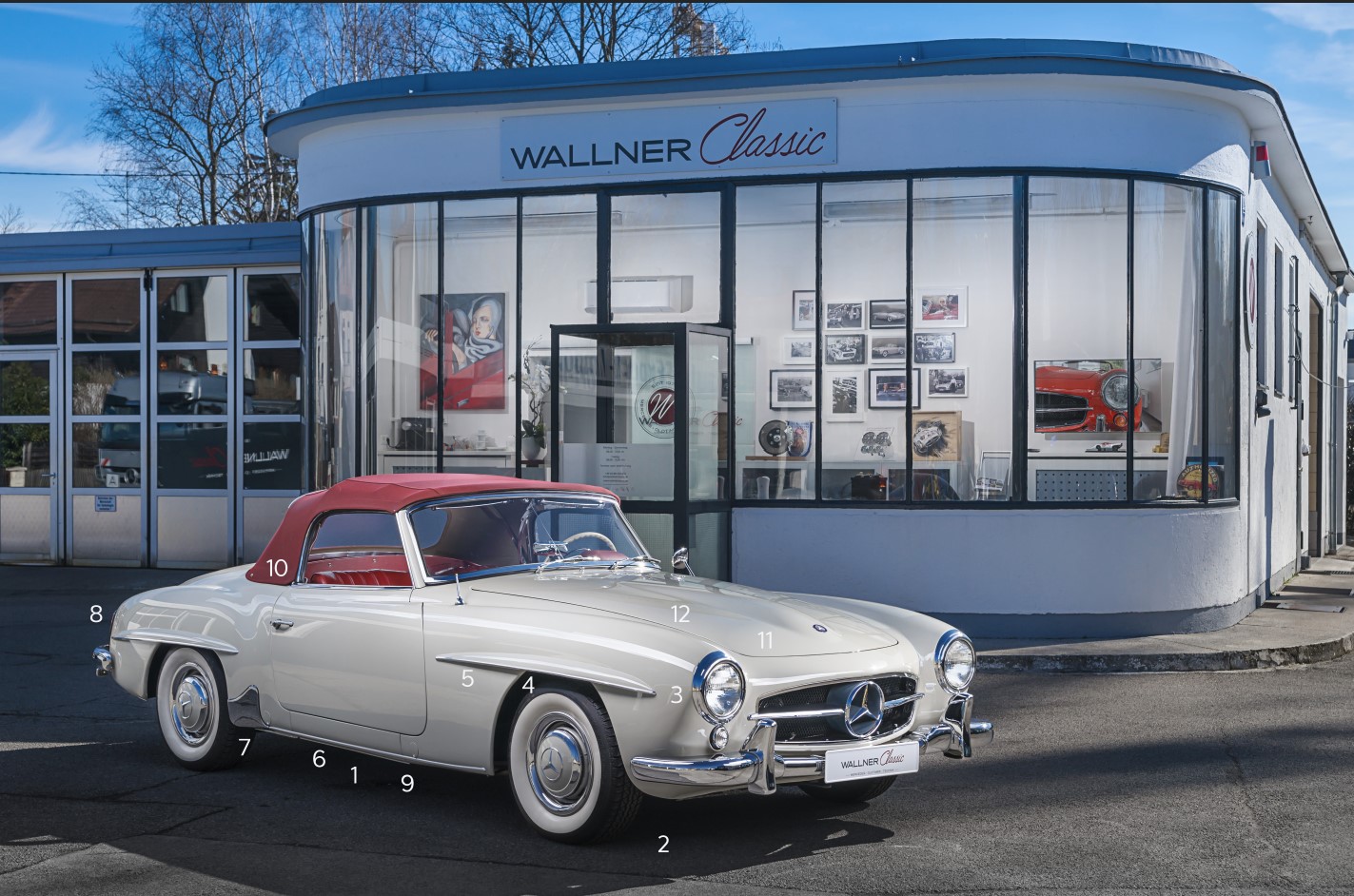
1 Condition of the floor frame system Longitudinal and cross members, rear thrust strut mounts, shock absorber domes, floor plate
2 Condition cross tube in front
3 possible rust on lamp pots
4 possible rust on wheel installation plates
5 Gills, condition of chrome plating
6 possible rust / spatula entry plate
7 possible rust area behind the stone chip corners
8 possible rust spare wheel well
9 possible rust on jacking points
10 Hardtop locking mechanism
11 correct motor - check!
12 correct carburetor - check!
